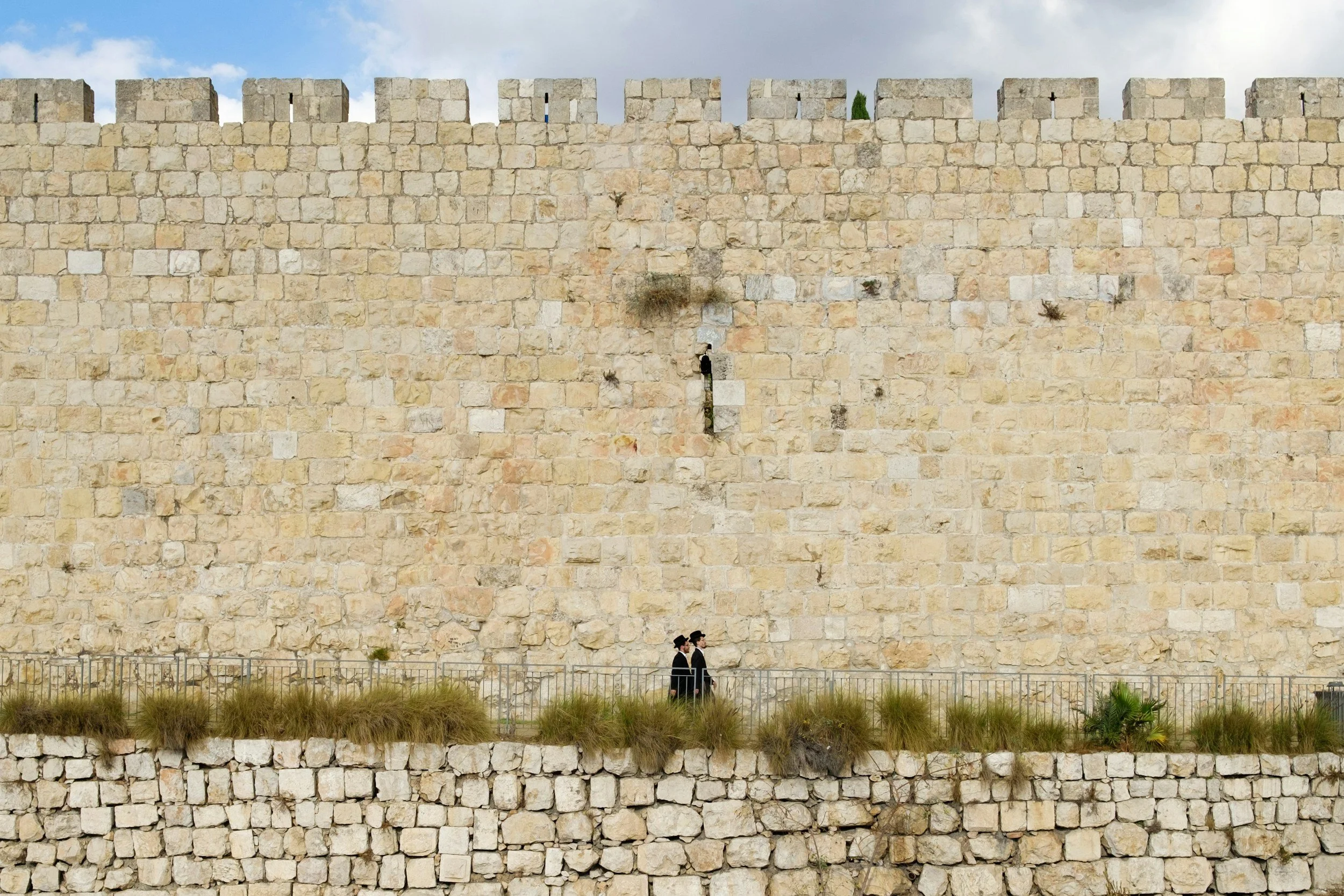
“For He himself is our peace, who has made the two one and has destroyed the barrier, the dividing wall of hostility.”
Ephesians 2:14
Stages of Reconciliation
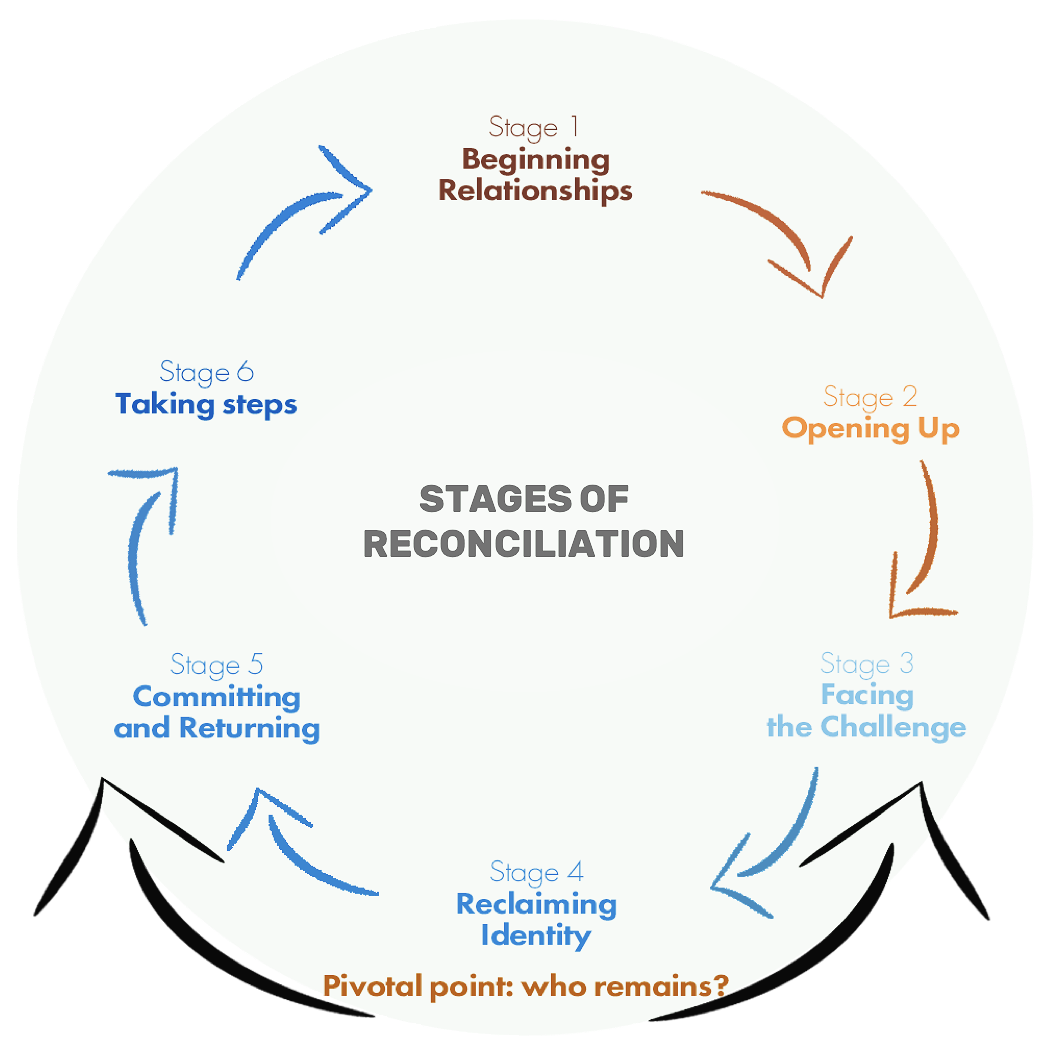
At the centre of Musalaha’s work is a six-stage cycle of reconciliation. It was born out of decades of practical initiatives seeking to reconcile Israelis and Palestinians, in the holy work of loving our neighbours. It looks at both relationships between individuals and overall group dynamics (combining the traditional interpersonal and intergroup pecebuilding mechanisms).
These stages are seen as cyclical rather than linear, reflecting the ongoing and chaotic nature of reconciliation.
In the work of Musalaha, the stages are worked through over a year to 18 months, with participants gathering in person to learn and discuss the topics at hand. Participants are encouraged to commit to the whole course, but are welcome to leave at any stage.
For a full description of the model of reconciliation used by Musalaha, read ‘Journey Through the Storm’ edited by Salim Munayer.
-
The programme begins with a Desert Encounter, where equal numbers of each participant group are brought to the desert in Jordan. This is a neutral space for all parties, and the desert is a key place of spiritual encounter in all of Judaism, Christianity and Islam. This allows participants to exit the atmospheres of dehumanisation, fear and demonisation that characterise so many other spaces in Israel Palestine.
-
After the initial encounters, Musalaha facilitates follow up meetings so that the relationships build and momentum isn’t lost. As relationships deepen, they begin to explore topics of identity, competing historical narratives, and obstacles to reconciliation.
-
This stage is also known as ‘withdrawal’. Having been exposed to the other side of the conflict, many participants find their identities and world view challenged. It is natural to need to step back and withdraw at this stage in response to the pain of this process.
-
During the withdrawal, participants are encouraged to reflect on their own identity either individually or in groups. The goal is not to deny a person’s identity or group pride, but to explore how that can be maintained without antagonism towards others.
This stage presents participants with a pivot point - either they return to their previous positions, or they choose to continue the process with a new openness.
-
Those who choose to return are then ready to continue to deepen their relationships. This stage also introduces the concept of biblical justice, which emphasies the interconnectedness of justice, mercy, truth and peace.
-
At this stage, participants are now committed to one another and to reconcilition. This manifests itself in joint projects, advocacy and feeling comfortable enough to go back to their communities and speak about the process they have gone through.